Best Portable Drawing Tablet When Desk Space Is Tight
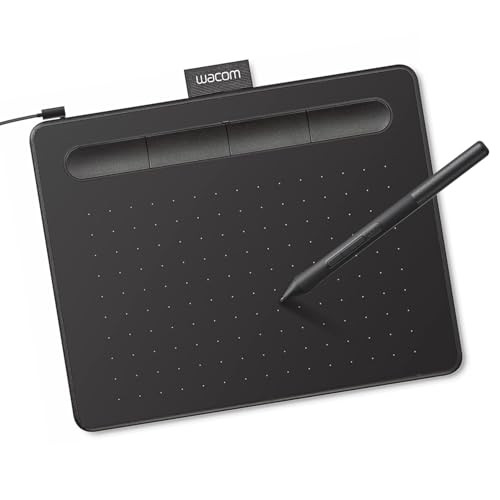
Six graphics tablets compared on the numbers that actually travel well: thickness, weight, active area and how many cables you have to carry. The winner is 0.1 inches thick and half a pound.

By Lamar CalhounUpdated 16 min read
On this page
- Best portable drawing tablet for graphic designers at a glance
- How I narrowed the field to six
- Does "for graphic designers" mean anything here?
- What actually fits in a laptop bag?
- 1. Wacom Intuos Small — Best overall
- 2. HUION Inspiroy H640P — Most versatile
- 3. XPPen StarG640 — Best budget pick
- 4. UGEE M708 — Best minimal setup
- Tethered pad or standalone screen?
- 5. XPPen Deco 01 V3 — Best upgrade
- 6. PicassoTab X11 — Best premium
- Express keys: worth the extra width?
- The verdict
- FAQ
The best portable drawing tablet for graphic designers is the Wacom Intuos Small, because at 0.1 inches thick and 0.51 lb it slides into a laptop sleeve and disappears. The PicassoTab X11 is the pick if you'd rather leave the laptop at home entirely, since it runs its own 11-inch 2K screen with no computer attached. Between those two sits the real decision. One specification splits this field, and it isn't pressure sensitivity: it's whether the pad needs a host machine to function. Everything else, from active area to shortcut keys, follows from that one answer.
Best portable drawing tablet for graphic designers at a glance
| Pick | Active area / screen | Thickness & weight | Price |
|---|---|---|---|
Best overall Wacom Intuos Small |
Small pad, wired | 0.1 in, 0.51 lb | Check Price |
Most versatile HUION Inspiroy H640P |
6 x 4 in | 0.31 in, 0.6 lb | Check Price |
Best budget pick XPPen StarG640 |
6 x 4 in | 0.1 in, 6 oz | Check Price |
Best minimal setup UGEE M708 |
10 x 6 in claim | 0.04 in, 14.2 in long | Check Price |
Best upgrade XPPen Deco 01 V3 |
10 x 6.25 in claim | 0.31 in, 2.2 lb | Check Price |
Best premium PicassoTab X11 |
11 in 2K screen | 0.04 in, 11 x 11 in | Check Price |



How I narrowed the field to six
I weighted three criteria and let the published figures do the sorting.
- Carry footprint, weighted heaviest. Thickness and the longest edge decide whether a pad travels or lives on a desk. Two picks here measure 0.04 in thick. Two measure 0.31 in, which is more than seven times that.
- Whether it needs a host device. Five of the six are pen pads that draw on someone else's screen. One is a full tablet with its own processor.
- Published specification depth. A listing that states weight, dimensions, model and warranty gives you something to compare. A listing missing weight leaves a hole you can't fill.
Why those three, in that order? Because a graphics tablet is a settled product category. Pen pressure figures have long stopped being the differentiator, and every pick here uses a battery-free stylus that never needs charging. What still varies wildly is how much of your bag the thing eats and how much other hardware it drags along. That's what I screened for.
Everything in this set publishes a warranty term, which is rarer than you'd think. Five state one year. The UGEE M708 listing states 2.
Does "for graphic designers" mean anything here?
Honest answer: less than the phrase suggests. Nothing in these six listings marks a pad as professional-grade in any measurable way. Wacom's own copy calls its pen technology "the preferred drawing tablet of professional graphic designers," but that's the manufacturer's sentence, not a specification you can check. XPPen describes the Deco 01 V3 as "designed for beginners" in the same breath as its 16,384 pressure levels.
So judge the hardware on the hardware. When you're shopping for a portable drawing tablet for graphic designers, the specifications that actually change your workday are these:
- Active area versus your monitor size. A 6 x 4 in pad mapped to a 27-inch display means small wrist movements cover big distances. Precise for retouching, cramped for long strokes.
- Shortcut keys. Four of these six publish express keys. Wacom's Intuos Small listing doesn't mention any.
- Operating system reach. HUION states Mac, Windows, Linux and Android 6.0 or later. XPPen's StarG640 adds Chromebook.
- Cable type. UGEE and XPPen both mention USB-C connectivity plus adapters. That matters if your laptop dropped USB-A years ago.
None of that is exclusive to design work. It's just what a pen pad is good at.
What actually fits in a laptop bag?
This is the section where the numbers get brutal. Portability is a measured property, not a marketing word, and the spread across these six is enormous.
Thickness first. The XPPen StarG640 and the Wacom Intuos Small are both listed at 0.1 in. The UGEE M708 and the PicassoTab X11 both come in at 0.04 in. The HUION H640P and the XPPen Deco 01 V3 are both 0.31 in.
Then the footprint. The Wacom Intuos Small is 6.3 x 7.87 in, which is smaller than most 13-inch laptops. The Deco 01 V3 is 13.8 x 8.54 in and weighs 2.2 lb. That's over four times the weight of the Wacom and roughly double the length. It's a desk instrument that happens to be flat.
The UGEE M708 is the interesting case: 0.04 in thick but 14.2 in long. Thin as a magazine, longer than most laptops. It'll slide into a bag but it wants the full-width pocket.
If your test is "does it live in my bag permanently," the answer is the Wacom, the StarG640 or the H640P. Everything else needs planning.
1. Wacom Intuos Small — Best overall
The Wacom Intuos Small wins on carry weight and specification completeness, not on raw drawing area.
Best for: designers who carry a tablet daily in a laptop sleeve Skip it if: you want programmable shortcut keys on the pad
Two figures make the case. At 0.1 x 6.3 x 7.87 in, this is the smallest overall footprint here. At 0.51 lb it's second-lightest, beaten only by the 6 oz StarG640. Combine those and you get the pad that's easiest to just always have with you, which is the entire point of a portable drawing tablet for graphic designers who move between a studio and a client's office.
Wacom publishes more about this unit than any other brand in the set: model CTL4100, released 2018, 1 year manufacturer warranty, weight, dimensions and colour. That's a complete picture. Wacom's listing describes EMR battery-free pen technology and says the tablet "can be used in any software program," plus bundled creative software you unlock after registering. Treat the software bundle as a claim to verify at registration rather than a guaranteed extra.
The trade-off against the rest of this set is bare simplicity. It's wired, so a cable is part of the deal. Two sellers list it, which is more than most here, but you're paying roughly mid-range money for the fewest published features. The H640P costs less and adds six keys.
Pros:
- Smallest overall footprint of the six
- Second-lightest at 0.51 lb
- Only 0.1 in thick
- Most complete published specifications in the set
- Model, release year and warranty all stated
Cons:
- No express keys mentioned in the listing
- Wired only, so a cable travels with it
- Active drawing area is not specified as a measurement
- Mid-range price position with the shortest feature list
2. HUION Inspiroy H640P — Most versatile
Six programmable keys and Android phone support make this the pad that adapts to whatever device you're carrying.

Best for: sketching from a phone as often as a laptop Skip it if: you need the thinnest possible pad
The H640P covers more devices than anything else here. HUION states compatibility with Mac, Windows, Linux PCs and Android phones or tablets on OS 6.0 or later. That Android 6.0 floor is the lowest of any pick that mentions Android at all: XPPen's Deco 01 V3 requires version 10.0 and above, and the UGEE M708 lists Android 10. If you sketch on an older phone, that gap decides it.
Six customizable press keys sit on the pad, which HUION suggests assigning to undo, zoom, brush switch or save. Practically, that's the difference between keeping your left hand on the tablet and reaching for the keyboard every fifteen seconds. The battery-free PW100 stylus needs no charging, so there's no dead-pen moment mid-deadline.
Dimensions are 0.31 x 10 x 5.98 in at 0.6 lb, with a 6 x 4 in drawing area. It's the second-cheapest pick here and one of only two with more than one seller listing it. The catch: 0.31 in is triple the Wacom's thickness, and you get the same small 6 x 4 in area on a wider body. You're carrying extra width for the key column.
Pros:
- Six customizable express keys
- Lowest Android requirement here at 6.0 or later
- Linux support, which no other pick states
- Second-cheapest of the six
- Battery-free PW100 stylus
Cons:
- 0.31 in thick, triple the Wacom and StarG640
- 10 in wide for only a 6 x 4 in active area
- Heaviest of the small pads at 0.6 lb
- No release year published
3. XPPen StarG640 — Best budget pick
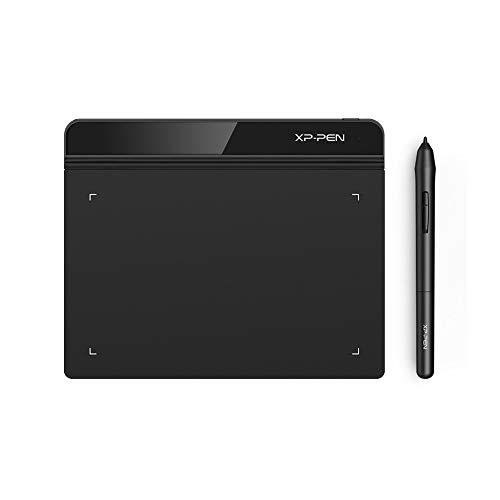
The lightest pad in the set at 6 oz, and the cheapest, with Chromebook support nothing else here claims.
Best for: a first tablet or a spare that lives in the bag Skip it if: you want shortcut keys or a large active area
Six ounces. That's the headline. The StarG640 is the lightest thing here by a clear margin, and at 0.1 x 7.5 x 6.5 in it matches the Wacom's thinness in a slightly wider body. XPPen describes it as 2 mm thick and calls it as slim as any entry-level graphics pad, which the 0.1 in figure supports.
It's also the cheapest of the six, and the only pick whose listing names Chromebook support outright. If your team runs Chromebooks, or you're buying a tablet for a student setup, that single line narrows the field to one. XPPen also mentions e-signatures, online teaching and Microsoft Office compatibility, so it's positioned as a general pen-input device rather than a pure art tool. The battery-free PN01 stylus keeps working indefinitely without charging.
Where it loses: no express keys are listed, so every shortcut runs through the keyboard. The 6 x 4 in area is the smallest here alongside the H640P. And only one seller lists it, which is the thinnest supply position in the set. It's the right pick when budget is the constraint, not when capability is.
Pros:
- Lightest pick at 6 oz
- Cheapest of the six
- Only pick listing Chromebook support
- 0.1 in thick, tied for thinnest pad
- Battery-free PN01 stylus
Cons:
- No shortcut or express keys
- Smallest active area at 6 x 4 in
- Only one seller lists it
- No weight-bearing extras like a stand or glove
4. UGEE M708 — Best minimal setup
A 10 x 6 in drawing area at 0.04 in thick, with the longest stated warranty in this set.

Best for: a 10 x 6 in drawing area with almost no thickness Skip it if: your bag will not take a 14.2 in pad
The M708 pulls off something the Deco 01 V3 doesn't: a large drawing surface in a body that's essentially flat. Dimensions are 0.04 x 8.3 x 14.2 in, and UGEE claims 10 x 6 in of active area with a papery texture surface. That's the same working space as the Deco at less than a seventh of the thickness.
It also carries the longest warranty term here. Where five listings state one year, the M708 states 2. In a category where a stylus tip or a USB port is the usual failure point, an extra year of coverage is worth reading twice.
Eight customizable express keys handle eraser, zoom, scroll and undo per UGEE's listing, and the brand claims Windows 11 through 7, macOS 10.10 or later, and Android 10. Connectivity is USB to USB-C with adapters included, which is the practical setup for a modern laptop. The stylus is passive with 16,384 claimed pressure levels.
The problem is length. At 14.2 in this is the longest pad in the set, longer than a 13-inch laptop. And UGEE publishes no weight at all, which is the one figure you most want when judging what to carry.
Pros:
- Longest stated warranty in the set at 2
- 0.04 in thick, tied for thinnest here
- 10 x 6 in claimed active area
- Eight customizable express keys
- USB-C adapters included per the listing
Cons:
- 14.2 in long, the longest footprint here
- No published weight figure
- Only one seller lists it
- No release year stated
Tethered pad or standalone screen?
Five of these six are pen pads. You look at your laptop screen while your hand draws on a blank surface beside it. One, the PicassoTab X11, has its own display and processor, so your hand and your eyes look at the same place.
That difference decides more than any specification on this page. Here's the split:
- A pad wins on cost, weight and software freedom. It works with whatever's already installed on your machine, which for most graphic designers means the desktop suite they've paid for. The Wacom, HUION, XPPen and UGEE picks all fall here.
- A standalone screen wins on independence. No laptop, no cable, no host device. PicassoTab lists 6GB RAM, 128GB storage expandable to 1TB, and an octa-core processor. But you're limited to what runs on the tablet itself.
The thing nobody mentions: a pad requires a second device you already own, so its true portability is pad plus laptop plus cable. The Wacom at 0.51 lb only looks light until you add the machine it plugs into.
If your professional work lives in desktop applications, the pad is the honest answer. If you want to sketch on a train without opening a laptop, it isn't.
5. XPPen Deco 01 V3 — Best upgrade
The largest drawing surface among the pads, with eight keys and 16,384 claimed pressure levels, at a real weight cost.

Best for: long illustration sessions on a fixed desk Skip it if: you commute with your gear
The Deco 01 V3 is the pad built for elbow room. XPPen claims a 10 x 6.25 in drawing area, the largest of any pad here, and eight customizable shortcuts arranged for right or left-handed users. The stylus is specified at 16,384 pressure levels with up to 60 degrees of tilt support, and it's battery-free.
Connectivity is USB-C to USB-C with adapters supplied, plus Android 10.0 and above. Worth noting: the model field reads Deco 01 V2 even though the title says V3, so confirm the revision on the listing before ordering if that matters to you.
Then the weight. At 2.2 lb and 13.8 x 8.54 x 0.31 in, this is the heaviest pick in the set by a wide margin, over four times the Wacom Intuos Small. It's also the second-most expensive here. Both of those cut against calling it a portable drawing tablet for graphic designers in any strict sense, which is exactly why it's the upgrade pick rather than the winner. Buy it for the surface area, park it on a desk, and accept that it isn't a daily commuter.
Pros:
- Largest claimed drawing area at 10 x 6.25 in
- Eight shortcut keys, configured for either hand
- 16,384 pressure levels and 60-degree tilt claimed
- USB-C to USB-C with adapters
- Reversible layout for left-handed users
Cons:
- Heaviest pick at 2.2 lb
- 13.8 in long and 0.31 in thick
- Model field reads V2 against a V3 title
- Second-highest price position, and no more portable for it
6. PicassoTab X11 — Best premium
The only pick that draws without a computer, on a fully laminated 11-inch 2K screen.

Best for: drawing without carrying a laptop at all Skip it if: your work lives in desktop design software
This one changes the shape of the question. The X11 is a complete tablet, not a pen pad. PicassoTab states an octa-core processor, 6GB RAM and 128GB storage expandable to 1TB, behind a fully laminated 11-inch 2K display the brand says reduces parallax and glare for a paper-like feel. Parallax is the gap between where your nib sits and where the line appears, and lamination is the fix.
Dimensions are 0.04 x 11 x 11 in, tying it for thinnest here in a square footprint. The listing bundles six extras it values at a hundred dollars: a lifetime Pro upgrade for the Concepts app, a lifetime VIP upgrade for the Artixo tutorials app, and four accessories. Those are the manufacturer's claims about third-party software, so verify them before you count on them.
The honest problem for a working designer: it's the most expensive pick here, and your desktop applications almost certainly don't run on it. PicassoTab describes the tutorials as beginner-oriented, step-by-step lessons. That's a learner's positioning, at the top price in this set. No weight is published, and only one seller lists it.
Pros:
- Runs standalone, no computer required
- Fully laminated 11 in 2K screen reduces parallax
- 6GB RAM and 128GB storage, expandable to 1TB
- 0.04 in thick, tied for thinnest here
- Bundled app upgrades and four accessories
Cons:
- Most expensive pick in the set
- Cannot run desktop design software
- No published weight figure
- Bundled tutorials are aimed at beginners
- Only one seller lists it
Express keys: worth the extra width?
Four picks publish shortcut keys. Two don't. And the pattern is worth seeing before you decide.
The HUION H640P has six keys and measures 10 in wide for a 6 x 4 in active area. That's roughly 4 in of body doing nothing but holding buttons. The Wacom Intuos Small has no listed keys and measures 6.3 x 7.87 in overall. The XPPen Deco 01 V3 and UGEE M708 both carry eight keys.
The case for keys is real. Undo, brush size and zoom are the three commands you hit constantly, and running them from the pad keeps your other hand free. The case against is the width penalty, and the fact that your keyboard is already sitting right there with every shortcut mapped.
My read: if the pad lives beside a laptop, the keyboard covers it and you should buy the smaller body. If the pad sits on a tablet stand or in your lap with no keyboard in reach, keys stop being a luxury.
Note the odd one out. The Deco 01 V3 lets you flip the layout for left-handed use, which no other pick states. Left-handed designers, start there.
The verdict
The Wacom Intuos Small is the winner because it solves the actual problem: it's the pad you'll still be carrying in six months. At 0.1 x 6.3 x 7.87 in and 0.51 lb, it's the smallest complete package here, and Wacom publishes more about it than any other brand in this set, down to the CTL4100 model number and the 2018 release. That's a tablet you can plan around.
Two conditions flip it. First, if you sketch on a phone as often as a laptop, buy the HUION Inspiroy H640P instead. Its Android 6.0 floor is four versions lower than the Deco 01 V3's requirement, and six express keys mean you're not reaching for a keyboard that isn't there. It also costs less than the Wacom.
Second, if you want to draw without a computer in the bag at all, the PicassoTab X11 is the only pick that does it, with an 11-inch laminated 2K screen and 128GB of storage on board. It's the most expensive here and it won't open your desktop suite, so buy it as a sketchbook rather than a workstation.
The runner-up's exact advantage over the Wacom is device reach. The Wacom is wired to a computer. The H640P will talk to a Mac, a Windows machine, a Linux box or an Android phone.
FAQ
Is a portable drawing tablet for graphic designers worth it over a mouse?
A portable drawing tablet for graphic designers is worth it the moment your work involves masking, retouching or any freehand line. A pen gives you pressure variation a mouse physically cannot, and every pick here uses a battery-free stylus, so there's nothing to charge. HUION and XPPen both frame their pads as mouse replacements for precise control.
What's the cheapest way into this category without regretting it?
The cheapest way into this category is the XPPen StarG640, the entry-priced pick here at 6 oz and 0.1 in thick. You give up express keys and settle for a 6 x 4 in area, but the battery-free PN01 stylus and Chromebook, Mac and Windows support are the same fundamentals the pricier pads offer. It's a genuine tablet, not a toy.
Will these drawing tablets work with my Android phone?
These drawing tablets work with Android at different minimum versions, so check yours first. HUION's H640P states Android 6.0 or later, the lowest bar in this set. The XPPen Deco 01 V3 requires 10.0 and above, and the UGEE M708 lists Android 10. The Wacom Intuos Small listing doesn't mention Android at all.
Wacom Intuos Small or HUION H640P for daily commuting?
For daily commuting, the Wacom Intuos Small has the edge on pure carry: 0.1 in thick and 0.51 lb, with a 6.3 x 7.87 in footprint. The HUION H640P is 0.31 in thick and 10 in wide for the same 6 x 4 in drawing area. Choose HUION only if you want its six express keys or its Linux and Android 6.0 support.
What's the most common mistake buying a graphics tablet?
The most common mistake buying a graphics tablet is chasing active area without checking your bag. The XPPen Deco 01 V3 offers a claimed 10 x 6.25 in surface, but it weighs 2.2 lb and runs 13.8 in long. That's four times the Wacom's weight. Match the surface to where you'll actually use it, not to the biggest number.
Start with the constraint, not the specification sheet. Measure the pocket in the bag you carry every day, then rule out anything that won't slide in. On these numbers, that usually leaves the Wacom Intuos Small standing, and its appeal is quieter than any feature list suggests: at 0.51 lb it's light enough that you stop deciding whether to bring it. A tablet you carry without thinking gets used on the train, in a meeting and at a client's desk. The 10 x 6 in pad you leave at home gets used never.