Best Compact Drawing Tablets: Wacom Intuos Leads
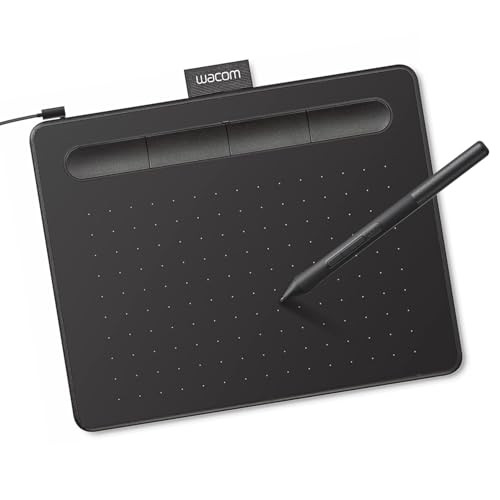
Five compact pen tablets compared on published specs: active area, thickness, weight and express keys. The Wacom Intuos Small takes the top spot, with a standalone 11-inch alternative for anyone who wants to sketch away from a computer.

By Lamar CalhounUpdated 15 min read
On this page
- Best compact drawing tablet for engineers at a glance
- How I screened these five listings
- What actually decides a compact pen tablet?
- 1. Wacom Intuos Small — Best overall
- 2. HUION Inspiroy H640P — Best for pros
- 3. XP-Pen StarG640 — Best minimal setup
- 4. PicassoTab 11" Standalone — Best premium
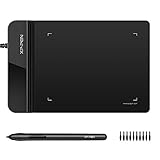
- 5. XP-Pen StarG430S — Best budget pick
- Does the engineers label hold up here?
- Wacom Intuos Small vs HUION H640P: which wins?
- What the listings do not tell you
- The verdict
- FAQ
The best compact drawing tablet for engineers is the Wacom Intuos Small, a 0.51 lb slab measuring 0.1 x 6.3 x 7.87 in that pairs a battery-free pen with a one-year manufacturer warranty. If you want shortcut keys on the tablet itself, the HUION Inspiroy H640P and its six programmable press keys is the smarter buy.
Active area is the specification that splits this field. Two of these five give you a 6 x 4 in surface, one drops to 4 x 3 in, and one abandons the pen-tablet format entirely for an 11-inch screen you draw on directly. That single number changes how much wrist travel a full-page markup costs you.
Best compact drawing tablet for engineers at a glance
| Pick | Active area | Thickness | Price |
|---|---|---|---|
Best overall Wacom Intuos Small |
Small (CTL4100) | 0.1 in | Check Price |
Best for pros HUION Inspiroy H640P |
6 x 4 in | 0.31 in | Check Price |
Best minimal setup XP-Pen StarG640 |
6 x 4 in | 0.1 in | Check Price |
Best premium PicassoTab 11" Standalone |
11 in screen | 0.04 in | Check Price |
Best budget pick XP-Pen StarG430S |
4 x 3 in | 1.38 in packed | Check Price |



How I screened these five listings
I started from the published specifications rather than the marketing headlines, because that's the only material here that compares cleanly across five brands.
Four numbers did the work:
- Active or screen area. A 6 x 4 in surface and a 4 x 3 in surface are different tools, not different sizes of the same tool.
- Overall footprint. The H640P measures 0.31 x 10 x 5.98 in. The Intuos Small measures 0.1 x 6.3 x 7.87 in. Same tablet class, very different desk profile.
- Mass. From 4 oz on the StarG430S up to 0.6 lb on the H640P.
- Published warranty. All five state one year, which is unusual for a set this size and worth noting.
What I deliberately did not screen on: pressure-level claims. Two of these listings advertise 8192 levels and the Wacom listing does not state a figure at all, which tells you the number is a marketing lever rather than a comparison axis. Anyone comparing a compact drawing tablet for engineers on pressure levels alone is comparing copywriting.
I also kept one product that breaks the category. The PicassoTab X11 needs no computer, and that changes the shortlist for anyone who sketches away from a desk.
What actually decides a compact pen tablet?
Most guides lead with pressure sensitivity. That is not what decides it. Two things do, and neither appears in a headline spec.
The first is active area versus your monitor width. A pen tablet maps its whole surface to your whole screen. Shrink the surface and every millimetre of pen travel covers more pixels, so fine linework gets twitchy. A 6 x 4 in area across a single laptop display is comfortable. That same 6 x 4 in stretched across two 27-inch monitors is not, and a 4 x 3 in area across a dual setup is close to unusable for detail work.
The second is driver support for your operating system. HUION's listing states Mac, Windows, Linux and Android 6.0 or later. XP-Pen's StarG640 listing names Mac, Windows and Chromebook. Wacom's says the Intuos works in any software program. Those are three different compatibility stories, and the one that matters is whichever matches the machine on your desk.
Everything else is preference:
- Express keys save keyboard reaches, but only if you map them once and remember them.
- Battery-free pens remove a charging habit. Four of these five state one.
- Thickness barely matters at these numbers. All the pen tablets sit at or under 0.31 in.
Check the compatibility line on the listing before the pressure figure. That order saves returns.
1. Wacom Intuos Small — Best overall
The Intuos Small is the safest default here: the thinnest pen tablet body of the group at 0.1 in, the smallest desk footprint, and a battery-free pen from the brand with the longest track record in the format.
Best for: someone marking up drawings on a laptop at a shared desk Skip it if: you need a wireless link or a screen you draw directly on
Compare footprints and the Intuos wins on the number that matters at a crowded desk. At 0.1 x 6.3 x 7.87 in it is narrower than the HUION H640P by nearly four inches, so it fits between a laptop and a keyboard without displacing either. It weighs 0.51 lb. That is heavier than both XP-Pen tablets, and the extra mass is welcome: a tablet that slides while you draw is worse than a tablet you notice lifting.
Wacom's listing describes its EMR technology as battery-free and says the pen feels like pen on paper. It also claims the tablet works in any software program, which for markup and annotation work is the claim that counts. Model CTL4100, released in 2018, with a stated one-year manufacturer warranty and bundled software on registration.
The trade-off is real. This is a wired tablet, it is the second-most expensive pick here, and Wacom publishes no active-area figure in this listing while HUION and XP-Pen both state 6 x 4 in. You are paying a premium for pen feel and driver maturity rather than for a bigger drawing surface.
Pros:
- Thinnest pen tablet body in this set at 0.1 in
- Narrowest footprint at 6.3 in wide
- Battery-free EMR pen, no charging habit
- Software bundle included on registration
- Stated one-year manufacturer warranty
Cons:
- Wired only, no wireless option stated
- No active-area figure published in the listing
- No express keys, unlike the H640P's six
- Second-highest price position of the five
2. HUION Inspiroy H640P — Best for pros
Six programmable press keys make this the pick for anyone who lives in keyboard shortcuts, and it is the only tablet here whose listing names Linux and Android support.

Best for: anyone who wants keyboard shortcuts mapped to the tablet Skip it if: your bag has no room for a 10-inch-wide slab
The H640P gives you a 6 x 4 in active area, the same as the StarG640, with a row of six customizable press keys the StarG640 lacks. HUION's listing suggests mapping undo, zoom, brush switch or save to them. For markup work, undo and zoom on the tablet edge means your left hand never leaves the surface.
Compatibility is the other reason it ranks this high. HUION states Mac, Windows, Linux PCs and Android 6.0 or later. No other listing in this set names Linux, and if your workstation runs it, your shortlist just became one item long. The pen is the battery-free PW100.
The cost is size. At 0.31 x 10 x 5.98 in this is the widest pen tablet here, ten inches across, and it is three times thicker than the Intuos Small at 0.31 in. It also weighs the most at 0.6 lb. Those press keys and the wider bezel buy you function at the expense of the compact footprint the Intuos protects. Priced in the middle of this group, it asks less than the Wacom and gives you more surface area, but a bigger desk claim.
Pros:
- Six customizable press keys, unique in this set
- Stated 6 x 4 in active area
- Only listing naming Linux and Android 6.0+
- Battery-free PW100 stylus
- One-year warranty stated
Cons:
- Widest body here at 10 in across
- Heaviest of the five at 0.6 lb
- Three times thicker than the Intuos Small
- Press keys need setup time before they help
3. XP-Pen StarG640 — Best minimal setup
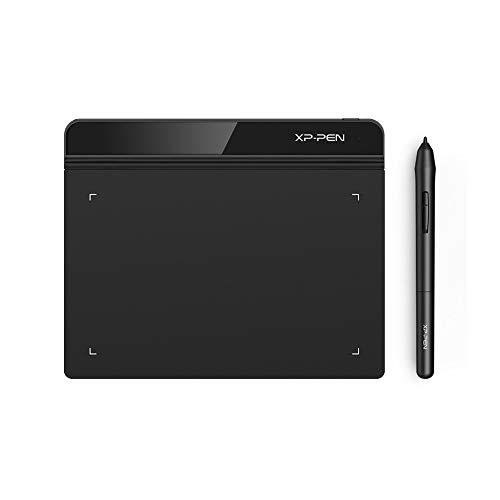
The StarG640 delivers the same 6 x 4 in area as the HUION at 0.1 in thick and 6 oz, which makes it the one I'd throw in a laptop bag without thinking.
Best for: a second machine or a Chromebook that travels Skip it if: you want programmable keys next to the drawing surface
Here's the useful comparison. The StarG640 matches the H640P's 6 x 4 in drawing area but measures 0.1 x 7.5 x 6.5 in against the HUION's 10 in width, and weighs 6 oz against 0.6 lb. You lose the six press keys. You gain a tablet that stops being luggage.
XP-Pen's listing states 2 mm thickness and calls out Chromebook support alongside Mac and Windows, which is the standout compatibility note here for anyone issued a managed Chromebook. The battery-free PN01 stylus needs no charging, and the listing names e-signatures, remote work and Microsoft Office programs including Word among its uses. That's a fair description of what a lot of pen input actually gets used for.
It is the second-cheapest pick, and one thing to flag: only one seller lists it, so your buying options are thinner than with the Wacom or HUION. The bigger limitation is the bare surface. No keys, no dial, nothing but active area, so every shortcut stays on your keyboard. For a travel tablet that's an acceptable swap. For a primary daily driver it is friction you will feel by the fiftieth undo.
Pros:
- 6 x 4 in active area at only 6 oz
- 2 mm thick per the listing
- Chromebook support named alongside Mac and Windows
- Battery-free PN01 stylus
- Second-cheapest of the five
Cons:
- No express keys at all
- Only one seller lists it
- Wider than the Intuos Small at 7.5 in
- No Linux support stated
4. PicassoTab 11" Standalone — Best premium
The only pick here that needs no computer: an 11-inch laminated 2K screen you draw on directly, with the octa-core hardware and storage to run apps on its own.

Best for: sketching on a couch or in a meeting with no laptop Skip it if: your work lives inside desktop CAD software
This one breaks the format, which is exactly why it earns a slot. Every other pick is a blind surface: you look at your monitor while your hand moves elsewhere. The X11 puts the drawing where your eyes already are. PicassoTab describes a fully laminated 11-inch 2K display that reduces parallax and glare for a paper-like feel, and states an octa-core processor with 6GB RAM and 128GB storage expandable to 1TB.
The published dimensions are 0.04 x 11 x 11 in, and the listing includes six bonus items: a lifetime Pro upgrade for the Concepts drawing app, a lifetime VIP upgrade for the Artixo tutorials app, and four accessories.
Two honest caveats. It is the most expensive pick here, and the listing publishes no weight, which matters for a device you may hold. More importantly, PicassoTab positions the Artixo tutorials as designed for beginners, and a standalone Android-style tablet does not connect to desktop software the way a pen tablet does. If your drawings live in a desktop application, the Intuos or the H640P is the tool. If you sketch and annotate away from a workstation, nothing else here competes.
Pros:
- Standalone, no computer required
- Laminated 11 in 2K screen reduces parallax per the listing
- Octa-core with 6GB RAM and 128GB storage
- Storage expandable to 1TB
- Six bonus items including two lifetime app upgrades
Cons:
- Most expensive pick in this set
- No weight published in the listing
- Won't drive desktop drawing or CAD software
- Tutorials framed for beginners, not experienced users
- Only one seller lists it
5. XP-Pen StarG430S — Best budget pick
At 4 oz and a 4 x 3 in active area, this is the cheapest way to find out whether pen input suits how you work.
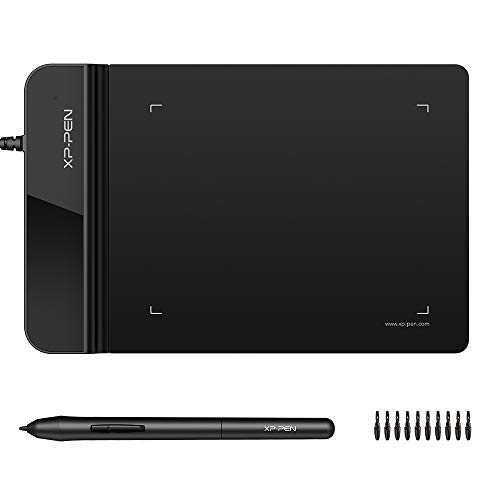
Best for: trying pen input before spending real money Skip it if: you zoom and pan across large drawings all day
The StarG430S is the cheapest of the five and the lightest at 4 oz. XP-Pen states a 4 x 3 in active area, 2 mm thickness, 8192 pressure levels and a battery-free stylus, plus a switchable left-hand or right-hand mode that the other listings here don't call out. Packed dimensions are 1.38 x 8.66 x 4.84 in, and there is a 12-month warranty.
The listing leads with OSU! gameplay and notes no driver install is needed for that game, alongside drawing, sketching and e-signatures. Read that positioning honestly: this is built as a cheap, fast pen surface first and a work tool second.
The 4 x 3 in area is the whole story. That is 12 square inches of surface mapped to your entire display, against 24 on the StarG640 and H640P. Halve the surface and you double how far the cursor jumps per millimetre of pen movement. For signing documents, quick sketches and short annotations, that's fine and the price is hard to argue with. For sustained detail work across a wide monitor, you'll fight it. Buy it as a trial, not as a commitment, and only one seller lists it.
Pros:
- Cheapest pick of the five
- Lightest at 4 oz
- Switchable left-hand and right-hand mode
- Battery-free stylus, 8192 levels claimed
- 12-month warranty stated
Cons:
- 4 x 3 in area is half the surface of the 6 x 4 in picks
- Listing leads with gaming, not professional use
- No express keys
- Only one seller lists it
Does the engineers label hold up here?
Partly, and you should know where the gap is. None of these five listings mentions CAD software, engineering applications, or compatibility with any specific design package. Not one. What they do describe is pen input, annotation, e-signatures, markup and general drawing.
So treat the engineering angle as your own judgement call rather than a promise on the box. Three practical checks before you buy any compact drawing tablet for engineers:
- Confirm your software reads pen input. Wacom's listing claims its tablet works in any software program. The others name operating systems, not applications. Verify against the package you actually use.
- Check your operating system by name. The HUION listing names Linux. The others do not.
- Decide whether you need pressure at all. Markup and redlining barely use it. Freehand sketching does.
The honest position: a pen tablet is a general-purpose input device. It will improve annotation and freehand work on any platform that accepts stylus input. Nothing in this data proves any of these five was designed with technical drawing in mind.
Wacom Intuos Small vs HUION H640P: which wins?
These two are the real decision, so here's the split.
The Intuos Small wins on footprint. 6.3 in wide and 0.1 in thick against the HUION's 10 in and 0.31 in. If your desk is shared, hot-desked, or already holding a laptop plus a keyboard, that four-inch difference decides it. Wacom also brings a stated 40-year history in the format and a software bundle on registration.
The H640P wins on function per inch. Six press keys and a published 6 x 4 in active area, at a lower price position than the Wacom. It names Linux and Android 6.0 or later, which the Wacom listing does not.
The cutoff is desk width. Under 24 inches of usable surface with a laptop already on it, take the Intuos. Above that, the H640P's press keys pay for the extra footprint every hour you use it.
One more note on availability: both list two sellers, more than the other three picks in this set.
What the listings do not tell you
Four blanks worth knowing about before you commit.
Cable length and connector type. Wacom's listing states wired. Nothing here publishes a cable length or whether it's USB-A or USB-C. If your laptop is USB-C only, plan on an adapter.
Replacement nib counts. Every pen tablet here uses a nib that wears down. None of these five listings states how many spares ship in the box, so budget for a nib pack.
Pressure levels on the Wacom. Two XP-Pen listings and the HUION advertise 8192 levels. The Wacom listing states no figure. That is a gap in the published data, not evidence of a lower number.
Weight on the PicassoTab. For a handheld 11-inch device, that omission matters more than it would on a desk-bound tablet.
None of these blanks is a reason to avoid a pick. They're reasons to read the live listing before you click, because that page carries current detail this article cannot.
The verdict
The Wacom Intuos Small is the best compact drawing tablet for engineers, and the reason is the footprint. At 0.1 x 6.3 x 7.87 in it takes less desk than any other pen tablet here while weighing 0.51 lb, enough to stay planted while you draw. Add a battery-free EMR pen, a stated one-year manufacturer warranty, bundled software on registration, and a claim that it works in any software program, and you have the pick that causes the fewest surprises.
Two conditions flip it. First, if you want shortcuts on the tablet rather than the keyboard, the HUION Inspiroy H640P gives you six programmable press keys and a published 6 x 4 in active area at a lower price position, and it's the only listing here naming Linux support. Second, if you sketch away from a computer, the PicassoTab X11 is the only pick that runs on its own, with an 11-inch laminated 2K screen and 128GB of expandable storage.
A third condition is worth naming. If you've never used pen input and want to test the idea cheaply, the 4 oz XP-Pen StarG430S costs the least of the five. Just expect its 4 x 3 in area to feel cramped on a wide monitor.
FAQ
Is a compact drawing tablet worth it for markup work?
A compact drawing tablet is worth it for markup if you annotate daily. Redlining with a pen is faster and more precise than dragging a mouse, and the two 6 x 4 in picks here give you enough travel for full-page work. Occasional annotation? A mouse is adequate. Daily markup pays the learning curve back inside a week.
Which is the better value, the XP-Pen StarG640 or the StarG430S?
Better value between the two XP-Pen tablets goes to the StarG640. It costs a little more than the StarG430S but doubles the drawing surface from 4 x 3 in to 6 x 4 in, and adds Chromebook support in the listing. The StarG430S wins only on weight, 4 oz against 6 oz, and on the lowest price position in this group.
Do these tablets work with Linux or a Chromebook?
Linux and Chromebook support split across brands here. The HUION H640P listing names Mac, Windows, Linux PCs and Android 6.0 or later. The XP-Pen StarG640 listing names Mac, Windows and Chromebook. No other pick states either platform, so match the listing to your machine before buying rather than assuming coverage.
How does the Wacom Intuos Small compare to the HUION H640P?
The Wacom Intuos Small compares favourably on size and loses on features. It measures 6.3 in wide and 0.1 in thick against the HUION's 10 in and 0.31 in, so it fits tighter desks. The H640P counters with six press keys, a stated 6 x 4 in area and a lower price position. Desk space decides it.
What mistake do first-time buyers make in this category?
The mistake first-time buyers make is chasing pressure levels. Three listings here advertise 8192 levels, a figure that means little for annotation and markup. Active area against your monitor width matters far more, and so does driver support for your operating system. Check those two first, then look at the pen specification.
Start with your desk, not the spec sheet. Measure the free surface beside your keyboard, then pick: under two feet of usable width, the Wacom Intuos Small drops in at 6.3 in and stays out of the way. More room than that, and the HUION H640P's six press keys start earning their footprint. The Intuos is the right default because it fails in the fewest places. Small, planted, battery-free, and backed by the longest history in the format. Open the listing, confirm the connector matches your laptop, and order a spare nib pack while you're there.