Best Streaming Device for Hotspot: Who's Not for This

A streaming-friendly hotspot needs dual-band Wi-Fi, a big battery, and headroom for 16 devices. Here's which of these five actually delivers, and who should skip the category entirely.

By Lamar CalhounUpdated 14 min read
On this page
- Best streaming device for hotspot at a glance
- Why this is a hotspot roundup, not a streaming stick roundup
- How I screened the field down to five
- What actually decides a streaming-capable hotspot?
- 1. AT&T Turbo Hotspot 3 — Best overall
- 2. GlocalMe Numen Air 5G Mobile Hotspot — Best premium
- 3. Statelinker S2 Portable WiFi Hotspot — Most versatile
- 4. JICICUXI Portable WiFi 6 Travel Router — Best for families
- 5. Generic 4G LTE Unlocked Mobile Hotspot — Best budget pick
- How many devices can you really stream on at once?
- Who should skip this category entirely?
- The verdict
- FAQ
The best streaming device for hotspot use, in this set, is the AT&T Turbo Hotspot 3, because dual-band Wi-Fi and a 3000 mAh battery give a Fire TV Stick or a phone enough headroom for a full evening of video. The GlocalMe Numen Air 5G is the alternate pick when you cross borders, with support the listing claims for more than 90 countries and speeds up to 2.5 Gbps. Both connect up to 16 devices, so a streaming stick, a laptop and a phone can share the same signal.
Best streaming device for hotspot at a glance
| Pick | Devices | Battery claim | Price |
|---|---|---|---|
Best overall AT&T Turbo Hotspot 3 |
16 | 3000 mAh, 15+ hrs claim | Check Price |
Best premium GlocalMe Numen Air 5G |
16 | 2.4" touch screen | Check Price |
Most versatile Statelinker S2 |
Wi-Fi 6 | 3.4 oz, all-day claim | Check Price |
Best for families JICICUXI M9 Travel Router |
Multiple | Screen display claim | Check Price |
Best budget pick Generic 4G LTE Hotspot |
16 | 2100 mAh, 12+ hrs claim | Check Price |


Why this is a hotspot roundup, not a streaming stick roundup
Here's the trick with "best streaming device for hotspot" as a search: it hides a real ambiguity. Some readers want a Roku or a Fire TV that plays nicely with a phone hotspot. Others want the hotspot itself, and they're planning to plug a streaming stick or a tablet into it. Amazon's results for this phrase come back full of hotspots, not streaming sticks, which tells you what the marketplace is actually indexing against the query.
So that's what this roundup covers: portable cellular hotspots that carry a streaming session well enough to matter. If you already own a Fire TV Stick or a Roku Streaming Stick and just want it to work in a hotel, none of these picks is the streaming hardware. All of them are the pipe that feeds it.
Two things make a hotspot streaming-capable rather than merely functional:
- Dual-band Wi-Fi, so a streaming client can sit on 5 GHz while phones handle the 2.4 GHz side.
- Battery big enough to outlast a film without a wall socket.
The AT&T Turbo Hotspot 3 is the only pick in this set with dual-band Wi-Fi named in its specifications. That is the single most useful line item for the streaming use case, and it's why it wins.
How I screened the field down to five
I set three criteria and weighted them for streaming rather than casual browsing, then read every listing against them.
- Simultaneous devices. A streaming stick, a phone and a laptop is three connections before you invite anyone else. Every pick here supports at least a small crowd, and four of the five publish a 16-device ceiling.
- Battery endurance in the manufacturer's own words. A hotspot that dies mid-episode is a hotspot you replace. I preferred listings that named a milliamp-hour figure and a run-time claim in the same sentence, so the number can be checked against practical use.
- Network flexibility. Some picks lock to one carrier. Others take any SIM. One skips SIMs entirely. Which one you want depends on how far you travel, so this drove the award labels rather than the ranking.
Two categories were disqualified. Anything sold without a battery, because a streaming session in a car park is the whole point. And anything that named Wi-Fi 4 as its ceiling, because 2.4 GHz alone throttles a 1080p stream once two phones join the network.
Why those weights? Streaming is a sustained, bandwidth-hungry, latency-sensitive load. It punishes a weak battery and a single-band radio faster than email or maps ever will.
What actually decides a streaming-capable hotspot?
Most hotspot guides compare peak download speed. That is not what decides it for streaming. A 1080p Netflix stream needs about 5 Mbps. A 4K stream needs about 25. Every device here clears both figures on paper, so the ceiling is not the constraint.
The real deciding criterion is what happens under sustained load with a few devices on the same radio. That is where dual-band Wi-Fi and Wi-Fi 6 do their work, by splitting traffic across frequencies and handling many small requests without stalling.
Concrete list of what matters, in the order it matters:
- Radio generation and bands. Dual-band Wi-Fi (AT&T Turbo Hotspot 3) or Wi-Fi 6 (Statelinker S2, GlocalMe Numen Air 5G) is the shortlist. Everything else is a compromise.
- Battery capacity in mAh. 3000 mAh (AT&T) buys more streaming hours than 2100 mAh (Generic 4G LTE).
- Carrier flexibility. SIM-locked, SIM-unlocked, or SIM-free CloudSIM (GlocalMe). Pick the one that matches your travel.
- Display. A 1.77" LCD (AT&T) or a 2.4" touch screen (GlocalMe) lets you see what's happening without pulling out an app.
Peak speed comes last, because you almost never touch it in real use.
1. AT&T Turbo Hotspot 3 — Best overall
The only pick here with dual-band Wi-Fi named in its specifications, and the best all-round base for a streaming session on the go.
Best for: a traveller streaming on a phone or tablet through a dedicated cellular hotspot Skip it if: you want a device that works outside the AT&T network
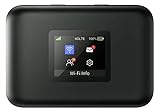
The AT&T Turbo Hotspot 3 wins because it names the two specifications that decide the best streaming device for hotspot use: dual-band Wi-Fi, and a 3000 mAh battery AT&T rates for over 15 hours on a single charge. Neither claim is unusual in the abstract, but no other pick in this set puts them both in the same specification sheet. The device weighs 0.54 lb, connects up to 16 Wi-Fi enabled devices at once, and displays status on a 1.77" LCD colour screen. AT&T covers it with a 1-year warranty, one of only two picks here to publish that figure. It's the one buyers choose most often in this set by a wide margin, which matches how straightforwardly it fits the streaming brief.
The trade-off is real: this is a prepaid AT&T device, and its usefulness ends at the edge of AT&T's coverage map. If you cross a border or want to try a different carrier, look further down.
Pros:
- Dual-band Wi-Fi named in the specifications
- 3000 mAh battery, over 15 hours per AT&T's claim
- Connects up to 16 devices simultaneously
- 1.77" LCD screen for at-a-glance status
- 1-year warranty published
Cons:
- Locked to AT&T; no flexibility across carriers
- Prepaid model, so plan management adds a step
- No 5G named in the specifications
2. GlocalMe Numen Air 5G Mobile Hotspot — Best premium
The one to buy when the streaming session might happen in three different countries this month.

Best for: international travellers who stream in more than one country Skip it if: you only ever connect within the United States
The Numen Air is the most expensive pick here, and the specifications explain why. GlocalMe pairs 5G with what it calls CloudSIM technology, which the listing says removes the need for a physical SIM by intelligently selecting the strongest available network. GlocalMe claims support for more than 90 commercialised 5G countries and over 390 operator networks, with speeds up to 2.5 Gbps and up to 16 connected devices. The unit measures 0.56 x 5.96 x 2.68 in, carries a 2.4" LCD touch screen for real-time data-usage and signal-strength monitoring, and ships with a 1-year warranty. That touch screen is the biggest and most legible in this set.
Against the AT&T pick, its case is international coverage, not local streaming. If you sit still in one city, the AT&T Turbo Hotspot 3 does the streaming job for less. The Numen Air earns its position the moment your itinerary crosses an ocean.
Pros:
- 5G named, with speeds up to 2.5 Gbps claim
- CloudSIM removes the physical SIM step
- 2.4" LCD touch screen, largest here
- Coverage claim across 90+ countries
- 1-year warranty published
Cons:
- The most expensive pick in this set
- CloudSIM data pricing sits outside your normal carrier plan
- Overkill if you never leave one country
3. Statelinker S2 Portable WiFi Hotspot — Most versatile
Wi-Fi 6 in a 3.4 oz shell, tuned for North American networks and free of the SIM hunt.

Best for: a US or Canadian user who wants Wi-Fi 6 without hunting for a SIM Skip it if: you cross a border and expect the same device to keep working
The Statelinker S2 splits the difference between the AT&T pick and the GlocalMe. Statelinker says it's designed exclusively for North America, so it isn't the travel-anywhere device. But it lists Wi-Fi 6 in its specifications, which none of the entry-level picks does, and the listing says the setup skips physical SIMs. At 3.4 oz with dimensions of 0.79 x 3.86 x 2.36 in, it's the lightest pick here with a published weight, and Statelinker calls the battery all-day without naming an mAh figure. It sits in the second-cheapest premium slot of the five and covers cases where the AT&T Turbo Hotspot 3 is too network-restricted and the Numen Air is more travel than you need.
The compromise is geographic. As soon as you fly out of the region, this pick is dead weight. Battery figures are also less specific than the AT&T sheet, which matters when you're planning a long stream.
Pros:
- Wi-Fi 6 named in the specifications
- No physical SIM required
- 3.4 oz, the lightest published weight here
- Built-in display for data-usage monitoring
- Priced below the flagship premium option
Cons:
- North America only, per the listing
- No mAh battery figure published
- No warranty term in the specifications
4. JICICUXI Portable WiFi 6 Travel Router — Best for families
The Wi-Fi 6 travel router that leans on multiple encrypted networks rather than one big pipe.

Best for: a family sharing one SIM across phones, tablets and a streaming stick Skip it if: you need a published weight and battery figure before you buy
JICICUXI's M9 is the second-cheapest here and sells fast in this set, second only to the AT&T. Its case for a family sits in one detail from the listing: the manufacturer says it runs multiple encrypted anti-theft networks in parallel, so a parent's phones, the kids' tablets and a Fire TV Stick can each sit on a separate SSID. For a streaming setup that shares one SIM across many devices without letting the streamer's traffic collide with everyone else's browsing, that segmentation matters. The screen shows real-time signal strength, battery capacity and connected users. JICICUXI publishes a 1-year warranty and colour (Pearl White), and lists model M9.
The trade-off is data. This listing doesn't publish a weight, a battery capacity, or a run-time claim. That's a gap when you're planning a road trip. If you'd rather have the numbers on paper, the AT&T Turbo Hotspot 3 or the Generic 4G LTE gives you them.
Pros:
- Multiple encrypted networks, per the listing
- Real-time screen for signal, battery, users
- Wi-Fi 6 named in the product title
- Second-cheapest pick in this set
- 1-year warranty published
Cons:
- No published weight or battery capacity
- SIM card not included; you supply one
- Fewer specifications overall than the AT&T pick
5. Generic 4G LTE Unlocked Mobile Hotspot — Best budget pick
A spare-drawer hotspot for the occasional stream, not the daily driver.

Best for: an occasional user who wants a spare hotspot in a drawer Skip it if: you plan to stream video for hours at a time
The cheapest of the five, and honest about what it is. The listing names 300 Mbps 4G LTE download speeds, a 2100 mAh battery rated for 12+ hours of continuous WiFi use, and up to 16 simultaneous devices with WPA/WPA2 encryption. The setup is plug and play: insert an unlocked SIM and power on. For a reader who wants a hotspot they can toss in a bag once a quarter, that's enough.
Set against the AT&T pick, though, the losses are specific. The battery is 900 mAh smaller, only 4G LTE is named (no dual-band Wi-Fi, no Wi-Fi 6), and it's the slowest seller of the five by a wide margin, which usually reflects how well the listing has proven itself. If streaming is what you actually plan to do, one of the four picks above is the right buy. This one is the backup.
Pros:
- The cheapest pick in this set
- 16 simultaneous devices per the listing
- 2100 mAh, 12+ hour battery claim
- SIM-unlocked, so any carrier works
- WPA/WPA2 encryption named
Cons:
- No dual-band Wi-Fi or Wi-Fi 6 named
- The slowest seller of the five by rank
- Weight figure listed as 1.2 g, which appears to be a listing error
- Sold as generic, with no brand support to fall back on
How many devices can you really stream on at once?
Four of the five picks in this set publish the same 16-device figure. That number is a Wi-Fi association limit, not a streaming-quality guarantee. In practice you'll hit the bandwidth ceiling long before you hit the device ceiling.
Rough shape of what one hotspot handles well:
- One 4K stream: eats about 25 Mbps sustained. Leaves headroom on the AT&T Turbo Hotspot 3 or the Numen Air, tight on a pure 4G LTE unit under load.
- Two 1080p streams plus phone browsing: about 12 to 15 Mbps. Every pick here can do this on paper.
- A streaming stick, two laptops on video calls and three phones: this is where dual-band Wi-Fi and Wi-Fi 6 start to matter, because the traffic pattern is many small requests rather than one big pull.
If your streaming session shares the hotspot with a home-office setup, the AT&T pick's dual-band or the two Wi-Fi 6 picks (Statelinker S2, GlocalMe Numen Air 5G) are the sensible shortlist. If the streaming is the only real load, the budget Generic 4G LTE holds up.
One trap most shoppers miss: the connected-devices count on the box is the association ceiling. The comfortable streaming ceiling is far lower, and it drops as you climb from 1080p to 4K.
Who should skip this category entirely?
Most searches for "best streaming device for hotspot" come from three profiles. Two of them are served by the picks above. The third should stop and reconsider.
- You have wired broadband and just want a streaming stick. Buy a Fire TV, Roku or Chromecast and stop reading. None of the products in this roundup is the device you want.
- You need internet at a fixed address with no cell service. A cellular hotspot is not the answer. A fixed-wireless antenna or Starlink is. These pocket devices are built for mobility, not for a stationary primary connection.
- You're planning to run a household off a hotspot for months. The battery of every pick here is measured in hours, and cellular data plans that permit tethering-heavy streaming are far pricier than they look.
If none of those is you, and you actually want to feed a streaming stick or a phone from a portable cellular pipe, this shortlist works.
The verdict
The AT&T Turbo Hotspot 3 is the best streaming device for hotspot use in this set. It's the only pick that names dual-band Wi-Fi in its specifications, its 3000 mAh battery is the largest published mAh figure here, AT&T claims over 15 hours of use per charge, and a 1-year warranty is on paper. Those four lines together are what a streaming session actually leans on. It sells faster than any other pick in this roundup, and it does so at a mid-range position rather than a premium one.
The runner-up is the GlocalMe Numen Air 5G, and its advantage is specific: coverage across more than 90 countries per its listing, plus 5G speeds up to 2.5 Gbps and a 2.4" touch screen for at-a-glance data management. It's the pick if the streaming happens outside your usual carrier's territory. Two named conditions flip the recommendation. If you cross borders, buy the Numen Air. If you want Wi-Fi 6 without leaving North America, buy the Statelinker S2. Otherwise, the AT&T Turbo Hotspot 3 is the right default.
FAQ
Is a hotspot really the best streaming device for hotspot searches?
Is a hotspot really the right buy? For this search, yes, in most cases. Amazon reads the query as a portable cellular hotspot to feed a streaming stick, phone or tablet, not as a Roku or Fire TV. If you already have home broadband, a streaming stick is what you want. If you need mobile internet for streaming, one of these five is the pipe.
What's the difference between the AT&T Turbo Hotspot 3 and the GlocalMe Numen Air?
The difference between the AT&T Turbo Hotspot 3 and the GlocalMe comes down to geography. The AT&T unit is prepaid and locked to AT&T, with dual-band Wi-Fi and a 3000 mAh battery for domestic use. The GlocalMe Numen Air 5G runs SIM-free through CloudSIM across 90+ countries per the listing, with 5G speeds up to 2.5 Gbps and a 2.4" touch screen for international travel.
Will 16 devices really stream at once on the best streaming device for hotspot?
Will 16 devices really stream at once? Not comfortably. Sixteen is the Wi-Fi association limit, not the streaming-quality limit. In practice a single cellular hotspot handles one 4K stream or two to three 1080p streams before congestion hits. The AT&T pick's dual-band Wi-Fi and the Wi-Fi 6 on the Statelinker S2 and Numen Air help most when many small requests share the radio.
Is the premium GlocalMe Numen Air worth the extra money?
Is the premium price worth it? Only if you stream across borders. The Numen Air's listing claims 5G at up to 2.5 Gbps, CloudSIM coverage across 90+ countries and 390+ operator networks, and a 2.4" touch screen for data monitoring. Inside the United States alone, the AT&T Turbo Hotspot 3 handles streaming for less and comes with a published 3000 mAh battery.
What specification matters most for streaming on a hotspot?
The specification that matters most for streaming is the radio, not the download-speed ceiling. Dual-band Wi-Fi (as on the AT&T Turbo Hotspot 3) or Wi-Fi 6 (Statelinker S2, GlocalMe Numen Air 5G) handles many small requests without stalling. Battery capacity in mAh comes second: 3000 mAh outlasts 2100 mAh across a film. Peak Mbps almost never limits real use.
If you're still choosing, start with where the streaming will happen. Inside one country's cellular footprint, the AT&T Turbo Hotspot 3 is the honest default, because dual-band Wi-Fi and a published 3000 mAh battery are the two specifications a streaming session actually leans on, and because it's the one buyers here choose most often. Step up to the GlocalMe Numen Air 5G only if the itinerary crosses borders often enough to make its CloudSIM coverage pay for itself. Skip the budget pick if you plan to stream daily, and skip the category entirely if you have wired broadband at home.