Best Budget Drawing Tablet for Graphic Designers
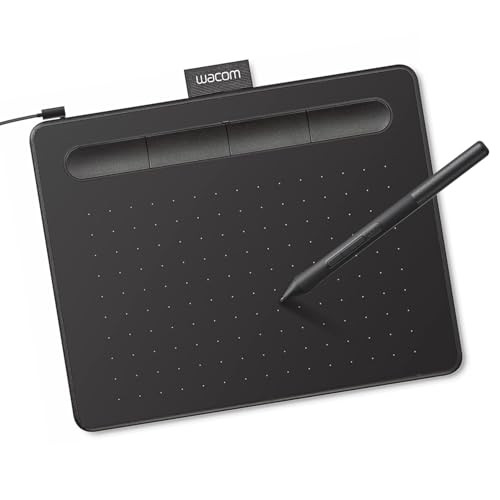
Seven tablets, one deciding question: how much active drawing area do you actually need? The Wacom Intuos Small leads, but a 10-inch pad wins if you letter or paint.

By Lamar CalhounUpdated 17 min read
On this page
- Best budget drawing tablet for graphic designers at a glance
- How I narrowed seven tablets down to the picks
- Active area is the spec that actually decides it
- 1. Wacom Intuos Small — Best overall
- 2. XPPen Artist 13.3 Pro — Best premium
- 3. XP-Pen StarG640 — Best budget pick
- 4. UGEE M708 — Best upgrade
- 5. HUION Inspiroy H1060P — Best minimal setup
- 6. XOPPOX Graphics Drawing Tablet — Best for pros
- 7. HUION Inspiroy H640P — Runner-up
- Screen tablet or pen-only pad?
- Does pen pressure level really matter?
- What the listings do not tell you about designer workflows
- Which pick fits your desk?
- The verdict
- FAQ
The best budget drawing tablet for graphic designers is the Wacom Intuos Small, a 0.51 lb pen-only pad in a 0.1 x 6.3 x 7.87 in body with a 1-year manufacturer warranty and Wacom's electromagnetic-resonance pen. If you need a screen under the nib and can accept the premium price position, the XPPen Artist 13.3 Pro is the better buy, with a 13.3 in fully-laminated FHD display and a claimed 60 degrees of tilt. The rest of this guide splits the field by active area, because that is what actually decides it.
Best budget drawing tablet for graphic designers at a glance
| Pick | Active area | Pen tech | Price |
|---|---|---|---|
Best overall Wacom Intuos Small |
Small pad, 0.1 x 6.3 x 7.87 in body | EMR battery-free, Wacom claim | Check Price |
Best premium XPPen Artist 13.3 Pro |
13.3 in FHD screen | Battery-free, 60° tilt claim | Check Price |
Best budget pick XP-Pen StarG640 |
6 x 4 in | Battery-free PN01 | Check Price |
Best upgrade UGEE M708 |
10 x 6 in | Passive, 16384 levels claim | Check Price |
Best minimal setup HUION Inspiroy H1060P |
10 x 6.25 in | Battery-free PW100, tilt claim | Check Price |
Best for pros XOPPOX Graphics Tablet |
10 x 6 in | Battery-free, 8192 levels claim | Check Price |
Runner-up HUION Inspiroy H640P |
6 x 4 in | Battery-free PW100, 8192 levels claim | Check Price |



How I narrowed seven tablets down to the picks
I worked entirely from the published listings. There is no lab here, no sample unit, no wrist-time. What I did have was seven specs[] sheets to line up and compare, and that is where the ranking comes from.
Three criteria did the heavy lifting, weighted in this order:
- Active area, in inches. For design work this decides more than pen pressure. A 6 x 4 in pad maps a very different arm motion to the screen than a 10 x 6 in pad does.
- Pen technology. All seven are battery-free, but only Wacom uses its own EMR system, and only two listings explicitly claim tilt.
- Warranty and set position. A published year of coverage matters at this price. Where two picks were close on the first two criteria, warranty and price position broke the tie.
I cut nothing from the seven, but I demoted picks whose listings were thin on the specs a designer actually reads. The XOPPOX listing, for example, is heavy on shortcut-key detail and light on tilt or resolution figures. That does not make it a bad tablet; it makes it a harder recommendation to justify as the default. The picks that lead this list are the ones whose published data most clearly matches what a graphic designer needs to do on day one.
Note on the search itself: Amazon's results for "graphic designers" here read as loose. The category is graphics tablets in general, and only Wacom's own listing uses the phrase "graphic designers" in its copy. Treat the modifier as a shopper's filter, not a manufacturer's spec.
Active area is the spec that actually decides it
Most guides to the best budget drawing tablet for graphic designers open with pen pressure. That is the wrong lead. Every pick in this set is battery-free with a modern stylus, and two list 8192 pressure levels while one claims 16384. Above roughly 2048 levels you are into diminishing returns for design work. What you feel every hour is the active area.
- 6 x 4 in pads (Wacom Intuos Small, XP-Pen StarG640, HUION H640P): map a small hand movement to the whole screen. Great for icon work and retouching. Cramped for lettering.
- 10 x 6 in pads (UGEE M708, HUION H1060P, XOPPOX): let you draw at closer to natural scale. Better for illustration and hand-lettering. They demand more desk.
- 13.3 in screen (XPPen Artist 13.3 Pro): 1:1 hand-eye. A different category of tool.
Pick the size that matches your dominant task. Pen pressure is the tiebreaker, not the decision.
1. Wacom Intuos Small — Best overall
The Wacom Intuos Small is the safest default for a designer buying a first budget pad, because Wacom's EMR pen and 1-year warranty carry the least risk in the set.
Best for: designers doing icon work, retouching and vector cleanup on a laptop Skip it if: you letter, paint or work at full-page scale
At 0.51 lb and 0.1 x 6.3 x 7.87 in, this is the lightest and thinnest pad in the shortlist, and by a clear margin. That matters if the tablet lives in a laptop bag between the office and home. Wacom describes the pen as electromagnetic-resonance, battery-free, and calls it "what the professionals use", which is marketing copy but reflects why Wacom pens hold their reputation among designers: consistent pressure curve, minimal jitter at slow speeds, no charging.
Model CTL4100 was released in 2018 and covered by a 1-year manufacturer warranty. Only two picks in this set carry a stated year of manufacturer coverage; the Wacom is one. Two sellers list it, which is the most in the shortlist alongside the H640P and helps if one goes out of stock.
The trade-off is the active area. This is a small pad, and if your day is A4 layouts or hand-lettering, you will feel the compression. The Intuos is deliberately narrow in scope: a designer's laptop tool, not a canvas.
Pros:
- Lightest in the set at 0.51 lb
- Slimmest body in the set at 0.1 in thick
- Wacom's own EMR pen technology
- 1-year manufacturer warranty
- Two sellers listed
Cons:
- Small active area unsuited to lettering or full-page work
- Wired only, per the full title
- Mid price position for entry-tier active area
2. XPPen Artist 13.3 Pro — Best premium
The Artist 13.3 Pro is the pick when you need to see the artwork under the nib, and it is the only screen tablet in the shortlist.
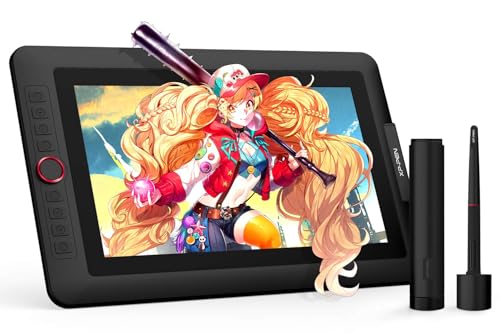
Best for: designers who need to see colour on the pad while they draw Skip it if: you want to stay in a true budget bracket
This is the most expensive pick in the set, and it is the only one whose listing puts a screen under the pen. XPPen states a 13.3 in fully-laminated FHD display with 88% NTSC colour, Adobe RGB at 91% or higher, and sRGB at 123% or higher, plus a 178-degree viewing angle. Those are the manufacturer's figures, not measured, but they matter here because pen-only pads do not put colour anywhere near the nib.
The listing also claims a 60-degree tilt function and a "Red Dial" placed for a natural drawing posture. Compatibility is broad: Windows 7 or later, macOS 10.10 or later, Chrome OS 88 or later, and Linux. That last one is unusual in this shortlist.
Physically, this is the bulkiest pick at 4.41 lb and 15.4 in wide. Its dimensions are 0.04 x 9.84 x 15.4 in, which reads slim on paper but occupies real desk once cables are attached. There is no stated warranty in the listing, which is the main mark against it at this position.
Pros:
- Only screen tablet in the set
- Full-HD, fully-laminated display claim
- 60-degree tilt function claim
- Broad OS support including Chrome OS and Linux
Cons:
- Premium price position
- Heaviest and largest pick at 4.41 lb
- No warranty period stated in the listing
3. XP-Pen StarG640 — Best budget pick
The StarG640 is the lowest price position in the shortlist, and the right first tablet if you are still deciding whether a pen pad suits your workflow.
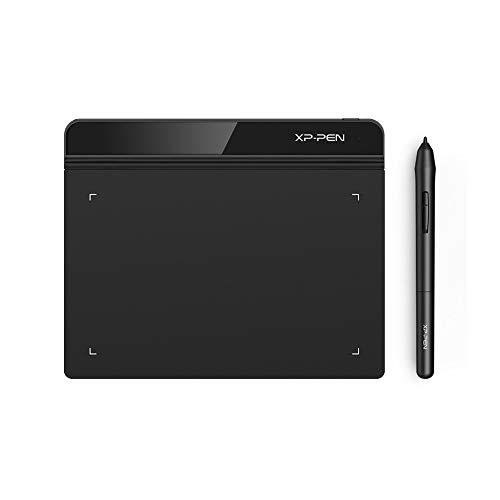
Best for: first-time buyers testing whether a tablet fits their workflow Skip it if: you already know you want a larger active area
The StarG640 is the cheapest of the seven and, at 6 oz, the lightest of any pad here except the Intuos. Its 6 x 4 in active area sits on a 0.1 x 7.5 x 6.5 in body, and the listing calls it 2 mm thick. XP-Pen ships the PN01 battery-free stylus with it, and lists compatibility with Mac, Windows and Chromebook. Chromebook support matters: only two picks in this set state it explicitly.
There is a 1-year warranty. The listing points the tablet at digital drawing, sketching, e-signatures, online teaching and remote work, alongside OSU! gaming, which tells you this is a general-purpose entry pad rather than a designer-first product. That is a fair description of what it is: the least risky way to find out how you feel about drawing on a pad.
The compromise is obvious. You get the smallest working area in the set with no shortcut keys visible in the specification list, and no tilt claim. If your Photoshop time is more brush than mouse, size up.
Pros:
- Cheapest pick in the shortlist
- 6 oz weight and 2 mm claimed thickness
- Chromebook support stated
- 1-year warranty
- Battery-free PN01 stylus
Cons:
- Smallest active area alongside the H640P
- No tilt function claim
- Generalist positioning, not designer-first
4. UGEE M708 — Best upgrade
The UGEE M708 is the cleanest step up from a 6 x 4 in pad, with a 10 x 6 in active area and the longest stated warranty in the set.

Best for: designers moving from a small pad to something closer to letter size Skip it if: your desk cannot spare 14.2 inches of width
The M708 V3 pairs a 10 x 6 in active area with a 0.04 x 8.3 x 14.2 in body and a stated 2-year warranty. That warranty length is the longest in the shortlist, and it sits in the entry price band, which is what makes this the upgrade pick rather than a mid-tier one. Bigger active area, longer coverage, entry price position.
UGEE describes the surface as "papery texture" and lists a passive stylus with a claim of 16384 pressure levels. That is a higher headline number than any other pick, though as I noted earlier, above roughly 2048 levels the differences are hard to translate into design output. Eight customisable express keys sit along the edge of the pad, and the listing states USB to USB-C connectivity with adapters, which matters if your laptop lost its full-size ports two upgrades ago.
The trade-off is width. At 14.2 in, this occupies a lot of desk. There is also no stated tilt function in the listing, and no published weight, which forces you to plan the setup on dimensions alone.
Pros:
- 10 x 6 in active area
- 2-year warranty, longest in the set
- 8 customisable express keys
- 16384 pressure levels claim
- USB-C connectivity with adapters
Cons:
- 14.2 in wide, needs desk space
- No published weight
- No tilt function claim in the listing
5. HUION Inspiroy H1060P — Best minimal setup
The H1060P is the pick if you assign real work to shortcut keys, with 12 programmable press keys and 16 soft keys.
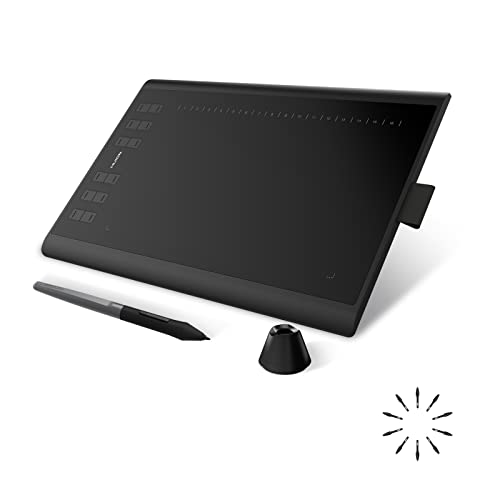
Best for: designers who lean on shortcut keys and hate leaving the pad Skip it if: you prefer a smaller, more portable pad
HUION positions the H1060P around its keys. There are 12 programmable press keys plus 16 programmable soft keys on this tablet, and no other pick in the shortlist matches that count. If you build brush switching, eraser, zoom, undo and save into a single row of muscle memory, this is the pad that supports that. The listing also notes a symmetrical design that flips 180 degrees for left-handed use in the driver.
Active area is 10 x 6.25 in, sitting on a 0.39 x 14.2 x 9.45 in body at 1.7 lb. That is the second-heaviest pad in the set behind the screen tablet. The stylus is HUION's battery-free PW100, and the listing explicitly claims a tilt function. Warranty is 1 year. Compatibility covers Windows 7 or later, macOS 10.12 or later, Android 6.0 or later, and Linux Ubuntu; a USB adapter is required for Mac.
The reason this is not the winner is price position. This pad sits in the premium band of the set for a 10-inch active area, which the UGEE M708 also offers in the entry band with a longer warranty. Choose the H1060P for the keys, not the size.
Pros:
- 12 press keys plus 16 soft keys, most in the set
- 10 x 6.25 in active area
- Tilt function claimed
- Left-handed 180-degree flip in the driver
Cons:
- Premium price position for the size
- 1.7 lb, heavier than most pen-only picks
- Mac requires a USB adapter
6. XOPPOX Graphics Drawing Tablet — Best for pros
The XOPPOX pad is the shortlist's Windows-first pick, pairing 12 customisable keys with 10 Windows-only multimedia keys.

Best for: advanced users on Windows who use multimedia keys alongside design work Skip it if: you work on a Chromebook or iPad
XOPPOX gives you a 10 x 6 in working area on a 14.2 x 9.5 in body, at 2.65 lb, with a battery-free pen and a claim of 8192 pressure levels. What differentiates it is the key layout: 12 customisable shortcut keys sit alongside 10 multimedia keys, and the listing states plainly that the multimedia keys work only on Windows. If your design day mixes Photoshop with music playback or system controls without leaving the pad, that is a specific advantage.
Compatibility is Windows XP through 11, Android 4.4 and above, and macOS 11 or later. The listing explicitly excludes iPhone, iPad and Chromebook. There is a 12-month warranty, and the listing mentions Microsoft Office compatibility too. No tilt function is claimed.
The reason this sits mid-table rather than higher is set position. It carries a premium price band for a 10-inch pad, and the listing leans harder on office-suite compatibility than on the design-specific specs a designer looks for first. Great tool, narrower audience.
Pros:
- 12 shortcut keys plus 10 multimedia keys on Windows
- 10 x 6 in active area
- 8192 pressure levels claim
- 12-month warranty stated
Cons:
- No Chromebook, iPhone or iPad support
- Multimedia keys work only on Windows
- No tilt function claim
- Premium price band for a pen-only 10-inch pad
7. HUION Inspiroy H640P — Runner-up
The H640P is the shortlist's second-cheapest pick, a 6 x 4 in pad that undercuts the Wacom and adds tilt to a small format.

Best for: designers who want the Wacom form factor at a lower position in the set Skip it if: you need a published tilt spec for brushwork
The H640P is 0.6 lb on a 0.31 x 10 x 5.98 in body with a 6 x 4 in working area. It is the second-cheapest of the seven, and two sellers list it, which is the most in the shortlist alongside the Wacom and useful if one runs out. HUION ships the same battery-free PW100 stylus used in its larger H1060P and claims 8192 pressure levels, with six customisable press keys along the edge for undo, zoom and brush switching.
Compatibility is Mac, Windows, Linux and Android 6.0 or later on smartphones and tablets. Warranty is 1 year. HUION frames this as a mouse replacement more than a design workstation, which is honest and reads as a solid entry point for the price position.
The reason this is not the winner: pen feel and warranty. The Wacom's EMR pen is what "what the professionals use" leans on in Wacom's own copy, and the two tablets share the same category of active area. If you are actively cross-shopping the two, decide on how the pen behaves in your app of choice, not on the pressure-level number.
Pros:
- Second-cheapest in the shortlist
- Two sellers listed
- Battery-free PW100 stylus
- Android smartphone and tablet support
Cons:
- Small active area
- No tilt function claim in the specs
- Six press keys, fewer than most larger pads
Screen tablet or pen-only pad?
Screen tablets, screen-less tablets and iPad-style devices all sit under the same shopping term, and it confuses first-time buyers. Only one pick here has a screen: the XPPen Artist 13.3 Pro. The other six are pen-only pads that sit flat on the desk while you look at your monitor.
Which is right depends on how you already work:
- Pen-only pad. You keep looking at the calibrated monitor you already own. Your hand and eye separate, which takes about a week to feel natural. This is fine for design tasks that involve editing existing artwork, tracing paths, brushing masks and building layouts.
- Screen tablet. Your hand and eye stay together. Better for illustration and painting, and for designers who came from paper. You spend more, and you carry more.
For a designer working on a good external monitor, a pen-only pad is often the right first buy. Save the screen tablet for the second one, once you know it earns its price.
Does pen pressure level really matter?
Pen pressure levels only matter up to a point. In this shortlist you will see 8192 stated on the HUION and XOPPOX pads, and 16384 stated on the UGEE. Wacom's Intuos listing does not put a pressure figure front and centre, and that is a fair reflection of how Wacom talks about pens: the curve and the tip feel over the headline number.
For graphic design work, above roughly 2048 levels the differences are hard to see in output. What you do notice, day to day:
- Initial activation force. How hard you press before a mark starts.
- Curve linearity. Whether small pressure changes produce even changes in width or opacity.
- Jitter at slow speeds. Ruled edges show it first.
None of those numbers are in the listings. Pen pressure levels are; treat them as a floor, not a comparison.
What the listings do not tell you about designer workflows
Two things the specs never publish, that matter to a working designer.
First, driver stability across app updates. Every tablet here needs a driver to expose its keys, pressure curve and monitor mapping. When Photoshop, Illustrator or Affinity ships a big update, drivers sometimes lag. Wacom's driver is the oldest and most heavily maintained. That does not make the others bad; it makes Wacom the safest bet if a driver-day breaks your Monday.
Second, key placement for your hand. A tablet with 12 keys on the wrong side is worse than a tablet with six on the right side. The H1060P and XOPPOX give you the most keys. The Wacom Intuos gives you fewer. Match the key row to your dominant hand, and use the driver's rotation option if you are left-handed; HUION states this explicitly.
Neither of these shows up in a spec table. Both decide whether the tablet still feels good three months in.
Which pick fits your desk?
Desk space is the practical constraint every buyer forgets until the box arrives. Here is the shortlist by footprint, smallest to largest:
- Wacom Intuos Small: 6.3 x 7.87 in body
- XP-Pen StarG640: 7.5 x 6.5 in body
- HUION H640P: 10 x 5.98 in body
- UGEE M708: 8.3 x 14.2 in body
- HUION H1060P: 14.2 x 9.45 in body
- XOPPOX: 14.2 x 9.5 in body
- XPPen Artist 13.3 Pro: 9.84 x 15.4 in body
If you work on a laptop-only setup, the three smallest are the practical choices. If you have a full desktop, the 10-inch pads open up. The Artist 13.3 Pro sits in its own row, and you should measure before you buy.
The verdict
For a graphic designer buying a first budget tablet, the Wacom Intuos Small is the pick, on the strength of a proven EMR pen, a 0.51 lb weight, a 0.1 in body and a 1-year manufacturer warranty. It is the most portable pad in the shortlist and the easiest to justify as a laptop tool.
Two conditions flip that. If you letter, paint or work at full-page scale, upsize to the UGEE M708 for its 10 x 6 in active area and 2-year warranty, at an entry price position. If you need colour under the nib for illustration-heavy design work, jump to the XPPen Artist 13.3 Pro for its 13.3 in fully-laminated FHD display, and accept the premium price position and the 4.41 lb body.
The cutoff between the Wacom and the UGEE is your dominant task: mouse-replacement editing on the Wacom, at-scale drawing on the UGEE. The cutoff between the UGEE and the XPPen is whether you need to see the artwork on the pad; if yes, the extra money buys the screen. The rest of the shortlist earns picks for specific cases, but those three cover most designers.
FAQ
Is a budget drawing tablet actually worth it for graphic design?
A budget drawing tablet is worth it if your day involves masking, path work, retouching or hand-driven layout adjustments. A pen replaces a mouse for tasks that need pressure or precision, and the payoff shows up in the first afternoon. If your work is mostly typography and stock-photo layouts, a good mouse and keyboard still get most of the job done.
Should I buy a screen tablet or a pen-only pad first?
Should you buy a screen tablet first? For most designers, no. A pen-only pad like the Wacom Intuos Small keeps your eye on the monitor you already colour-managed, and it costs less. Screen tablets like the XPPen Artist 13.3 Pro are better for illustration and painting, where hand-eye alignment matters more than the price you pay for the display underneath.
Does the Wacom Intuos Small work with graphic design software?
The Wacom Intuos Small works with graphic design software across Adobe, Affinity and open-source tools. Wacom's own listing states the tablet can be used in any software program to draw, paint, edit photos and video and mark up. The pressure curve and pen-to-paper feel are what Wacom leans on in its copy, and that reflects why the Intuos line has held its place among designers.
How does the UGEE M708 compare to the HUION H1060P?
The UGEE M708 compares to the HUION H1060P on two axes. They share a roughly 10-inch active area, and both list battery-free pens. The M708 has a 2-year warranty in an entry price band, and 8 shortcut keys. The H1060P sits in the premium band with 12 press keys plus 16 soft keys and a stated tilt function. Pick the M708 on price and warranty; pick the H1060P on keys.
What is the biggest mistake first-time drawing tablet buyers make?
The biggest mistake first-time drawing tablet buyers make is chasing pressure-level numbers instead of matching the active area to their work. A 6 x 4 in pad cramps a hand-lettering designer; a 10 x 6 in pad wastes desk for someone doing icon cleanup. Decide on size first, pen technology second, and treat pressure-level figures as a floor, not a ranking.
The next step is simple: measure your desk, decide whether you letter and paint at scale or edit and lay out on a laptop, and pick from the two picks that match. The Wacom Intuos Small is the default for the laptop-editor because Wacom's pen and 1-year warranty carry the least risk in the shortlist. The UGEE M708 is the default for the at-scale designer for its 10 x 6 in area and 2-year warranty at an entry price position. Everything else is a specific-case answer. Start with the size that fits your day, then let the pen decide the rest.