Best Wireless Drawing Tablet for Students on a Budget
Only three of these five actually cut the cable. Here's which wireless drawing tablet fits a student's bag, budget and software, and where a wired pick still wins.

By Lamar CalhounUpdated 14 min read
On this page
- Which of these are actually wireless?
- Best wireless drawing tablet for students at a glance
- How I narrowed the field to five
- 1. Wacom Intuos Small — Best overall
- 2. DIGIDRAW TW410 Wireless Drawing Tablet — Runner-up
- 3. XP-Pen Deco MW — Best for beginners
- 4. GAOMON WH851 — Best premium
- 5. XP-Pen StarG640 — Best budget pick
- What actually decides a student's first tablet
- How big a work area do you need?
- When a different pick wins
- The verdict
- FAQ
The best wireless drawing tablet for students is a harder pick than it looks, because the wired Wacom Intuos Small (CTL4100, 0.51 lb) still writes the smoothest line in this group. If you truly need to cut the cable, the DIGIDRAW TW410 runs on Bluetooth 5.0 in a 6.3 x 3.9 in body. Two of these five are wired only, so read the connection column before the price.
Which of these are actually wireless?
Here is the catch a student needs to know before spending a cent. Amazon returned five tablets for this search, and two of them do not connect wirelessly at all.
The Wacom Intuos Small is wired. Its own size label says so: "Small, Wired." The XP-Pen StarG640 is wired too, connecting over USB with no Bluetooth mentioned anywhere in its listing. So if a cordless setup is non-negotiable, three names remain.
- DIGIDRAW TW410 — Bluetooth 5.0, dual-mode with a USB-C wired fallback
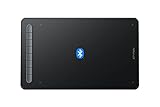
- XP-Pen Deco MW — Bluetooth 5.0 chip, ships with a dongle
- GAOMON WH851 — USB-C wired plus Bluetooth 5.0
I kept the two wired tablets in this guide on purpose. The Wacom is the smoothest writer here and the StarG640 is the cheapest of the five, so a student weighing "wireless" against "good" and "affordable" deserves to see the whole trade. Just know which is which before you buy.
Best wireless drawing tablet for students at a glance
| Pick | Connection | Active area | Price |
|---|---|---|---|
Best overall Wacom Intuos Small |
Wired (USB) | Small 6.3 x 7.87 in body |
Check Price |
Runner-up DIGIDRAW TW410 |
Bluetooth 5.0 + USB-C | 6.3 x 3.9 in | Check Price |
Best for beginners XP-Pen Deco MW |
Bluetooth 5.0 | 8x5 in class | Check Price |
Best premium GAOMON WH851 |
Bluetooth 5.0 + USB-C | 8 x 5 in | Check Price |
Best budget pick XP-Pen StarG640 |
Wired (USB) | 6x4 in | Check Price |



How I narrowed the field to five
I worked from the published listings for every graphics tablet the search surfaced, then cut on three named criteria before ranking what was left.
Three things got a tablet cut:
- No usable spec sheet. A listing that names no dimensions and no connection type tells a student nothing. I dropped those first.
- Duplicate size classes with weaker data. Where two near-identical pads competed, I kept the one with a published weight and warranty.
- Screen tablets. Pen displays are a different product and a different price world. This guide is pen-on-pad only.
The five survivors split cleanly. Two are entry-priced, one sits mid-range, and two are the most expensive picks here. The XP-Pen StarG640 is the cheapest of the five; the GAOMON WH851 is the priciest. That spread matters for a student, because the cheapest workable tablet here is wired and the wireless ones cost more.
I ranked on pen feel first, then connection, then work area and portability. The Wacom leads because its pressure technology is the reference point every other brand chases, even though it needs a cable.
1. Wacom Intuos Small — Best overall
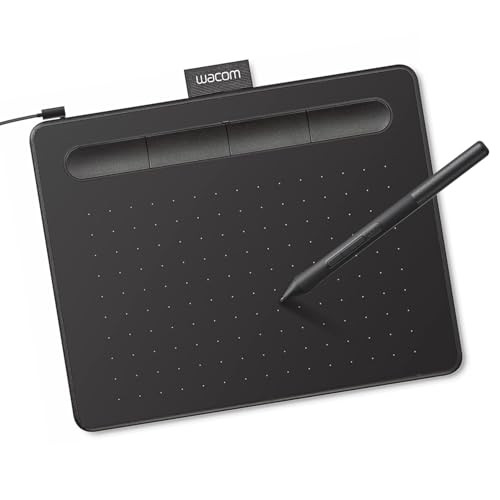
The Wacom Intuos Small writes the cleanest line in this group, which is why it wins even though it needs a cable.
Best for: students who value pen feel over cutting the cable Skip it if: you need to work away from a USB port
The Intuos Small is the pick I trust most for a student learning to draw, and the reason is the pen. Wacom uses EMR, a battery-free technology the company says "feels like pen on paper." That pen-on-paper feel is the thing beginners notice within a minute, and it is what makes practice sessions stick. The pad weighs 0.51 lb and measures 0.1 x 6.3 x 7.87 in, so it slides into a backpack pocket next to a laptop.
Wacom's listing says the tablet "can be used in any software program" and bundles creative software with registration, which softens the sting for a student who does not already own an art app. The model is the CTL4100, released in 2018, and it carries a 1 year manufacturer warranty. Two sellers list it here, more than most of this set.
The trade-off is blunt. This is the one wired pick I'm recommending as best overall, so it is not the wireless drawing tablet the search asked for. If cutting the cable is the whole point, jump to the DIGIDRAW.
Pros:
- Battery-free EMR pen Wacom likens to pen on paper
- Light 0.51 lb body, easy to pack
- Works with any drawing software per the listing
- Bundled creative software on registration
- Two sellers stock it, more than the rest here
Cons:
- Wired only, so not truly wireless
- Small active area limits big strokes
- No shortcut keys, unlike the XP-Pen and GAOMON
- 2018 design is the oldest here
2. DIGIDRAW TW410 Wireless Drawing Tablet — Runner-up
The TW410 is the truly cordless pick that fits the smallest bag, and it is the cheaper of the two entry-priced tablets that matter.

Best for: students who want a truly cordless pad in a small bag Skip it if: you want a larger active area
If the word "wireless" is doing the heavy lifting in your search, this is the pick to start with. DIGIDRAW says the TW410 runs a "stable Bluetooth 5.0 connection (133 PPS)" and switches to USB-C wired mode for a faster 300 PPS when you need it. That dual-mode setup means a dead battery never stops you mid-sketch.
It is genuinely small: 0.04 x 6.3 x 3.9 in and 0.55 lb, thinner on paper than any other pad here. DIGIDRAW claims a battery-free stylus with 16,384 levels of pressure and a "paper-like texture" surface with a curved palm rest. The listing also flags it for OSU! and e-learning, so it doubles as a note-annotation tool between art sessions. It carries a 1 Year Manufacturer warranty and one seller lists it.
The honest limit is the work area. At 6.3 x 3.9 in the active surface is the tightest here, so long sweeping strokes need more zooming and panning than the 8x5 pads. For a student sketching in lecture halls, that compactness is the point. For a comic page, it will feel cramped.
Pros:
- Genuine Bluetooth 5.0, plus USB-C wired backup
- Thinnest and among the lightest at 0.55 lb
- 16,384 pressure levels claimed by DIGIDRAW
- Second-cheapest of the five
- Paper-like surface with curved palm rest per listing
Cons:
- Smallest active area, tight for big strokes
- Only one seller lists it
- Bluetooth speed rated lower than wired mode
- Brand less established than Wacom or XP-Pen
3. XP-Pen Deco MW — Best for beginners
The Deco MW pairs real Bluetooth with eight shortcut keys and the widest operating-system support here, which makes it the easiest first tablet to set up.

Best for: beginners who want shortcut keys and wide OS support Skip it if: you want a published weight and warranty before buying
Beginners fumble the most on setup and on remembering keyboard shortcuts, and the Deco MW answers both. XP-Pen says its "8 Efficient Shortcut Keys" can be customized to replace common keyboard combinations, so a new student keeps a hand on the pad instead of hunting for Ctrl-Z. The X3-Smart-Chip stylus is battery-free, and XP-Pen claims faster response and more precise positioning from it.
Compatibility is where this one pulls ahead. The listing names Windows 7/8/10/11, Mac OS X 10.10 or later, Android 6.0 or later, Chrome OS 88 or later, and Linux. A student on a school Chromebook is covered. The box includes the tablet, a dongle, a USB-A to USB-C cable, the X3 Elite stylus, and two OTG adapters, so you can connect to a phone or laptop out of the box. Dimensions are 0.23 x 10.4 x 6.3 in, an 8x5-class active area.
The catch is thin data. The listing publishes no weight and no warranty, and only one seller stocks it. It also sits in the most expensive tier here, so you pay up for that OS coverage.
Pros:
- Real Bluetooth 5.0 wireless connection
- Eight customizable shortcut keys for beginners
- Widest OS list here, including Chrome OS and Linux
- Generous accessory bundle with OTG adapters
- Battery-free X3-Smart-Chip stylus
Cons:
- No published weight or warranty
- Priced in the most expensive tier here
- Only one seller lists it
- Thickest body at 0.23 in
4. GAOMON WH851 — Best premium
The WH851 adds a center dial to a large 8 x 5 in area, giving it the most control per stroke of anything here.

Best for: students who want a dial and a large 8x5 area Skip it if: you carry your kit everywhere and count grams
The WH851 is the pick for a student who has settled on digital art and wants room to grow. Its active area is a full 8 x 5 in, and the body runs 0.1 x 11.4 x 6.74 in. That extra canvas means fewer zoom-and-pan interruptions when you draw a long curve, which is the single biggest frustration on the small pads.
GAOMON puts a dial in the center of the eight customizable keys. The listing says it handles zoom, brush size, and scrolling, so you adjust settings without touching the keyboard. The battery-free AP519 pen claims 16,384 pressure levels, the same headline figure as the DIGIDRAW, and GAOMON says the pen sinks only 0.45mm for a firmer, more paper-like feel. It connects over USB-C or Bluetooth 5.0 and works with Windows, Android, and Mac, backed by a 1 year warranty.
The cost is weight and price. At 0.88 lb this is the heaviest tablet here, and it is the most expensive of the five. For a student who commutes with a full bag, that heft is a daily tax the smaller pads do not charge.
Pros:
- Largest active area at 8 x 5 in
- Center dial for zoom, brush, and scroll
- 16,384 pressure levels claimed by GAOMON
- Dual USB-C and Bluetooth 5.0 connection
- Low 0.45mm pen sinking per listing
Cons:
- Heaviest at 0.88 lb
- Most expensive pick here
- Larger footprint eats desk and bag space
- Only one seller lists it
5. XP-Pen StarG640 — Best budget pick
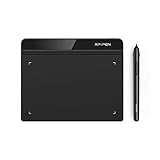
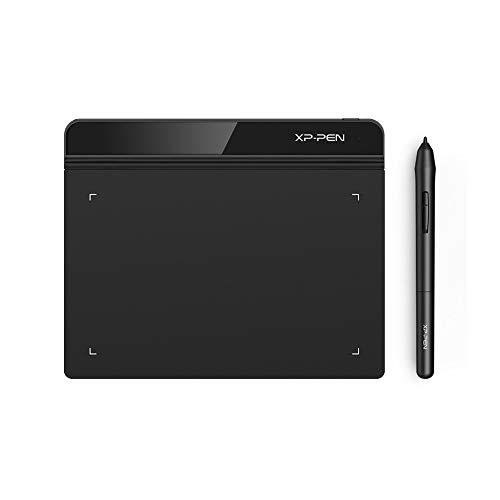
The StarG640 is the cheapest tablet in this group and the lightest, which makes it the safest first buy if wireless is not essential.
Best for: students on the tightest budget who have a spare USB port Skip it if: you specifically need Bluetooth
For a student testing whether digital art is even for them, the StarG640 lowers the risk to almost nothing. It is the cheapest of the five, and at 6 oz it is the lightest pad here by a clear margin. The body measures 0.1 x 7.5 x 6.5 in with a 6x4 in drawing area, and XP-Pen says it is only 2 mm thick, "as slim as all primary level graphic tablets."
The battery-free PN01 stylus never needs charging, which XP-Pen positions as a straight mouse replacement. The listing calls out Chromebook support specifically, plus Mac and Windows, and lists e-learning, e-signatures, and Microsoft Office work alongside drawing. It carries a One-Year Warranty. For a note-taking, homework, and sketching mix, that is a lot of range from the entry price.
The obvious cut is wireless. The StarG640 connects over USB with no Bluetooth in its listing, so it fails the exact modifier this search asked for. It also has no shortcut keys and the second-smallest area here. Buy it as the low-risk wired starter, not the cordless dream.
Pros:
- Cheapest pick of the five
- Lightest here at 6 oz
- Very slim 2 mm profile per listing
- Battery-free PN01 stylus, no charging
- Named Chromebook and Office support
Cons:
- Wired only, no Bluetooth
- No shortcut keys
- Small 6x4 in active area
- Only one seller lists it
What actually decides a student's first tablet
Most guides compare pressure levels first. That is the wrong lead. Three of these tablets quote 16,384 levels, and a beginner cannot feel the difference between that and half as much. Pressure numbers are a spec-sheet arms race, not a buying decision.
What actually decides it for a student is the mix of pen feel, connection, and how the tablet fits your daily kit. Pen feel is why the Wacom wins on merit. Connection is why the DIGIDRAW, Deco MW, and GAOMON exist in a wireless guide at all. Fit is why weight and area matter more than a pressure figure.
- Pen feel decides whether you enjoy practicing, which decides whether you improve.
- Connection decides where you can work, a desk or a lecture hall.
- Active area decides how often you stop to zoom.
- Weight decides whether the thing lives in your bag or your drawer.
Sort by those four, in that order, and the best wireless drawing tablet for students stops being a guess.
How big a work area do you need?
Active area is the spec students underweight, and it changes how a tablet feels more than any pressure number. Bigger is not automatically better; it depends on your desk and your bag.
The split in this set is clean. Two pads sit around 6x4 in: the DIGIDRAW TW410 at 6.3 x 3.9 in and the XP-Pen StarG640 at 6x4 in. Two sit at 8x5 in: the XP-Pen Deco MW and the GAOMON WH851. The Wacom Intuos Small is a small pad without a stated active-area figure, so judge it as compact.
Small pads suit tight desks, cramped lecture tables, and anyone who wants the lightest bag. Larger 8x5 pads give long strokes room to breathe, which helps with lettering, comics, and any work with sweeping lines. The trade is footprint and weight. The 8 x 5 in GAOMON is the heaviest here at 0.88 lb; the 6x4 StarG640 is the lightest at 6 oz. Match the area to where you actually draw, not to the biggest number you can afford.
When a different pick wins
The best wireless drawing tablet for students is not one answer for everyone. Here is when to switch from the overall winner.
- If you must go cordless, pick the DIGIDRAW TW410. The Wacom is wired, full stop. When Bluetooth is the deal-breaker and you want the smallest bag, the TW410's 6.3 x 3.9 in body and Bluetooth 5.0 lead the wireless field.
- If you draw on a Chromebook, pick the XP-Pen Deco MW. Its listing names Chrome OS 88 or later plus Linux, the widest coverage here, and its eight shortcut keys ease the learning curve.
- If desk space is generous and you want the most control, pick the GAOMON WH851. The 8 x 5 in area and the center dial reward a student who already knows they are committed.
- If the budget is the hard limit, pick the XP-Pen StarG640. It is the cheapest and the lightest, and it does homework, e-signatures, and sketching on one wired cable.
The verdict
The Wacom Intuos Small is the best wireless drawing tablet for students in this group on merit, and it wins with one honest asterisk: it is wired. Its battery-free EMR pen, which Wacom likens to pen on paper, is the smoothest writer here, and at 0.51 lb with a 1 year warranty it is a low-risk, long-life first tablet. If pen feel is what makes you keep practicing, this is the one.
Two conditions flip that pick. First, if cutting the cable is non-negotiable, the DIGIDRAW TW410 is the pick to start with. It runs Bluetooth 5.0 in the smallest, thinnest body here, with a USB-C wired mode as backup, and it is the second-cheapest of the five. Second, if you draw on a Chromebook or want shortcut keys built in, the XP-Pen Deco MW earns its place with the widest OS list and eight customizable keys, though it publishes no weight or warranty.
Everyone else falls out cleanly: the GAOMON WH851 for a big 8 x 5 in desk setup, and the XP-Pen StarG640 for the tightest budget. Start with the Wacom's pen, then decide how much the cable really costs you.
FAQ
Is a wireless drawing tablet worth it for students?
A wireless drawing tablet is worth it for students who move between a desk, a library, and lecture halls, since Bluetooth removes the one cable that snags in a bag. If you always work at the same desk near a USB port, the wired Wacom Intuos Small gives you better pen feel for less fuss. Judge it by where you actually draw.
Which of these tablets are genuinely wireless?
Which of these tablets are genuinely wireless comes down to three: the DIGIDRAW TW410, the XP-Pen Deco MW, and the GAOMON WH851 all list Bluetooth 5.0. The Wacom Intuos Small and the XP-Pen StarG640 are wired only, so despite this guide's title, treat them as cabled starters rather than cordless picks.
Wacom Intuos Small or DIGIDRAW TW410 for a beginner?
Wacom Intuos Small or DIGIDRAW TW410 depends on the cable. The Wacom writes the smoother line and bundles software, but it needs USB. The TW410 offers real Bluetooth 5.0 in a 6.3 x 3.9 in body and costs less. Pick the Wacom for pen feel at a desk, the DIGIDRAW for a cordless setup in a small bag.
Does pressure sensitivity matter for a student tablet?
Pressure sensitivity matters less than students expect. Three picks here quote 16,384 levels, a figure a beginner cannot really feel against a lower one. Pen feel, connection, and active area decide the daily experience far more. Treat a high pressure number as a bonus, not the reason you buy, and weigh weight and work area first.
What is the best budget wireless drawing tablet for students?
The best budget wireless drawing tablet for students is a trap in this set, because the two cheapest picks split on connection. The XP-Pen StarG640 is cheapest but wired. The DIGIDRAW TW410 is the second-cheapest and genuinely Bluetooth. If wireless is essential on a tight budget, the TW410 is your answer.
Start by answering one question: does the cable actually bother you where you draw? If it does not, the Wacom Intuos Small gives you the best pen feel here and a light 0.51 lb body that still slips into any bag. If it does, the DIGIDRAW TW410 is the cordless pick to open first, with the Deco MW close behind for Chromebook users. Buy for how you work day to day, not for the highest pressure number on the box, and a first tablet you enjoy is a first tablet you keep using.